Misplaced Faith Becomes Wounded Faith
October 25, 2026Pastor Patrick presented today's message, "Misplaced Faith Becomes Wounded Faith." A video of today's message is here on YouTube. It may help to be familiar with the message but that is not required to enjoy the thoughts below.
Today's message comes on the 8th of 12 weeks in the Book of Mark.
Patrick ended his message saying, "God loves you and will do you good." That's quite clearly the message of the New Testament. But what about the Old Testament? The answer becomes quite clearly yes:
"Know therefore that the Lord your God is God; he is the faithful God, keeping his covenant of love to a thousand generations of those who love him and keep his commandments." Deuteronomy 7:9
"Give thanks to the Lord, for he is good. His love endures forever." Psalms 136:1
"Though the mountains be shaken and the hills be removed, yet my unfailing love for you will not be shaken nor my covenant of peace be removed,” says the Lord, who has compassion on you." Isaiah 54:10
"The Lord appeared to us in the past, saying: 'I have loved you with an everlasting love; I have drawn you with unfailing kindness.'" Jeremiah 31:3
"And he passed in front of Moses, proclaiming, 'The Lord, the Lord, the compassionate and gracious God, slow to anger, abounding in love and faithfulness.'" Exodus 34:6
"Because of the Lord’s great love we are not consumed, for his compassions never fail. They are new every morning; great is your faithfulness!" Lamentations 3:22-23
"For the Lord is good and his love endures forever; his faithfulness continues through all generations." Psalms 100:5
"Give thanks to the Lord, for he is good; his love endures forever." 1 Chronicles 16:34
"But I am like a green olive tree in the house of God. I trust in the steadfast love of God forever and ever." Psalm 52:8
All of the above references to love come from the Hebrew OT word kheh-sed (חֵסֵד). There is at least one other word that also basically means love, ah-HEB (אָהַב), and covers many similar meanings, but we will ignore for the time being.
Here's the BibleHub.com information about kheh-sed. The overview states: "Chesed saturates the Hebrew Scriptures as the hallmark of God's covenantal character and the standard for covenantal response among His people. Frequently rendered in the Berean Standard Bible as 'loving devotion,' it combines steadfast loyalty, mercy, kindness, and relational faithfulness. Of its approximately 247 occurrences, over half lie in the Psalms, yet it shapes every major section of the Old Testament, from the Torah to the Post-Exilic books.
If you're curious, here's the ah-Heb entry.
What about us not always understanding...
"Trust in the Lord with all your heart and lean not on your own understanding; in all your ways submit to him, and he will make your paths straight." Proverbs 3:5-6
"For my thoughts are not your thoughts, neither are your ways my ways,” declares the LORD. “As the heavens are higher than the earth, so are my ways higher than your ways and my thoughts than your thoughts." Isaiah 55:8-9
"Can you fathom the mysteries of God? Can you probe the limits of the Almighty? They are higher than the heavens above, what can you do? They are deeper than the depths below—what can you know?" Job 11:7-9
"Be still, and know that I am God; I will be exalted among the nations, I will be exalted in the earth." Psalm 46:10
"Indeed, if you call out for insight and cry aloud for understanding, and if you look for it as for silver and search for it as for hidden treasure, then you will understand the fear of the Lord and find the knowledge of God." Proverbs 2:3-5
"Many are the plans in a person’s heart, but it is the LORD’s purpose that prevails." Proverbs 19:21
"Your word is a lamp for my feet, a light on my path." Psalm 119:105
Bonus
Hanukkah on the Rocks (2024 movie)
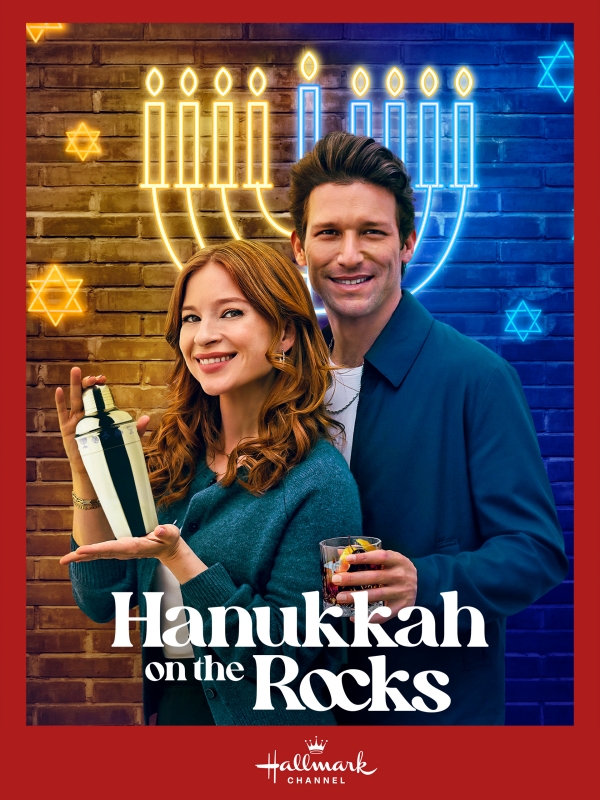 Here's the IMDB description: "One week before Hanukkah, corporate lawyer Tory finds herself unexpectedly unemployed and questioning the career she's dedicated years to. As she helps her Bubby prepare for the holiday, she embarks on a quest across Chicago to find the last box of coveted Hanukkah candles. Her search leads her to Rocky's, an Old Town bar, where she encounters Jay, a charming doctor from Florida, his grandfather Sam and a cast of quirky regulars who make her rethink everything. Torn between keeping her job loss a secret and embracing a newfound sense of belonging, Tory ends up bartending at Rocky's, transforming it into the vibrant 'Hanukkah on the Rocks' celebration. Through festive food, drinks, and games, she revitalizes the bar, bonds with Jay, and finds the courage to pursue her true calling. As Tory navigates the holiday, she learns that sometimes a detour can lead you exactly where you're meant to be, lighting the way to a future filled with joy, romance, and self-discovery."
I just got done watching this movie. And it's really very good, with a little more "reality" to it than Hallmark
But let's talk about Hanukkah (Wikipedia) or Chanukah or Hanukah. It's also called the Festival of Lights. The story is told in the second book of the Maccabees which is included in the Septuagint, an early Greek translation of the Old Testament, and the first two books (of eight) are included in the canon of the Roman Catholic Church and more of the books in the canon of the various Orthodox Churches.
The 2nd Book of Maccabees tells of the miracle of the oil. Only a one-day supply remained after they fought to recover the Temple, but it lasted eight days until a sufficient amount of new oil could be made from olives. Hence the eight days of Hanukkah celebrate the Jewish recovery of Jerusalem and the Second Temple and this miracle of the oil lasting 8x longer than it should. Hanukkah (חֲנוּכָּה) is from the Hebrew root meaning dedicate.
The centerpiece of the celebration is the menorah, a 9-holder candelabra with space for eight candles each marking one night of Hanukkah plus one in the middle used to light the other eight. One candle is lit on the first night, two the next, and so on until on the eighth night all eight are lit. The candle used to light the other 8 candles, the shamash, is, of course, lit every night. Ideally, the menorah is placed in a spot where it can be seen publicly so that the miracle can be made publicly known.
Hanukkah celebrations can be quite elaborate including Jewish prayer, Hanukkah music, the game of dreidel, and special foods like latkes every night, especially the first and last night. A few other games and drinks were added in the movie! It has, in some sense, become the Jewish equivalent of Christmas as it occurs in December and gift-giving has become common. It's actually a relatively minor holiday in the Jewish canon.
There is one New Testament reference: John (NT) 10:22–23, "Then came the Festival of Dedication at Jerusalem. It was winter, and Jesus was in the temple courts walking in Solomon's Colonnade." (NIV)
Traditions and celebrations vary widely just as Christmas celebrations do.
In the movie, a song is sung in Hebrew each night after the candles are lit. The English translation is: "Blessed are You, LORD our God, King of the universe, who has sanctified us with His commandments and commanded us to kindle the light[s] of Hanukkah. A-men."
In 2026, the first night of Hanukkah is December 4th and the Festival of Lights ends at sundown on December 12th.

One of my other passions is railroading. Did you know there's at least one Hanukkah Train in December? Roaring Camp Railroads (Felton, CA): "will share in Chanukah traditions with a train ride through the streets of Santa Cruz listening to Chanukah music and enjoying warm latkes and hot apple cider provided by Chabad by the Sea. Play festive games and win prizes!" It's returning in 2027. Details.
Bonus2
The Stones Cry Out
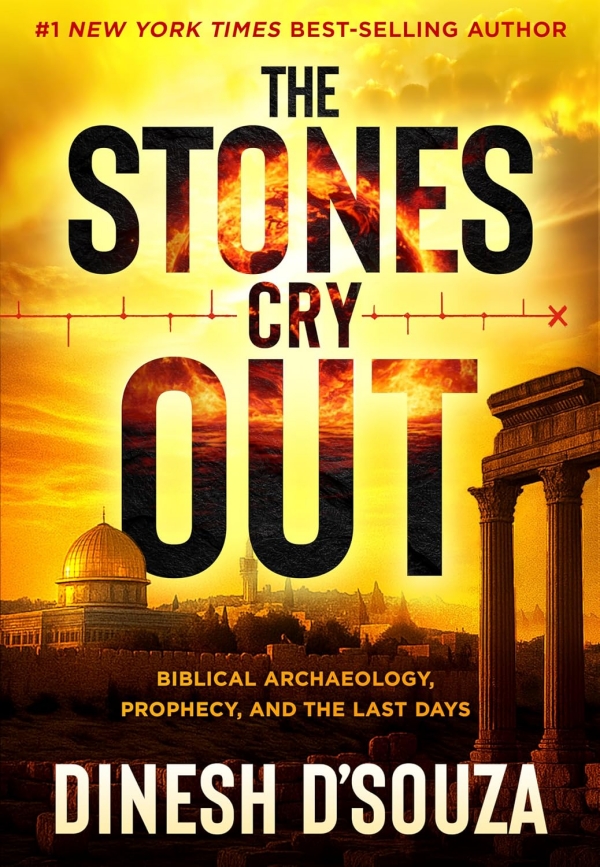 The Stones Cry Out: Biblical Archaeology, Prophecy, and the Last Days is a book and a video series by Dinesh D'Souza in cooperation with PragerU. Here's the description from the website: "The Bible is one of the founding documents of our civilization, which includes a historical account of Jews and Christians. If the Bible describes real people and events, it should belong to students of history as well as people of faith. But can the reality of the Bible be seen today? Enter biblical archaeology, which uncovers ancient objects and connects them to the people and events described in the Bible. Join Dinesh D'Souza on a journey through biblical history, from the era of the patriarchs to the early Christian movement. Learn whether archaeology confirms the Bible—and whether a single significant discovery contradicts it. The story continues in D'Souza's companion book, The Stones Cry Out, which explores the discoveries behind the documentary.
Luke 19:37-40, "And when he was come nigh, even now at the descent of the mount of Olives, the whole multitude of the disciples began to rejoice and praise God with a loud voice for all the mighty works that they had seen; Saying, Blessed be the King that cometh in the name of the Lord: peace in heaven, and glory in the highest. And some of the Pharisees from among the multitude said unto him, Master, rebuke thy disciples. And he answered and said unto them, I tell you that, if these should hold their peace, the stones would immediately cry out." (KJV)
As D'Souza suggests, the stones are crying out.
"The whole Bible cannot be authenticated through archaeology - there is a lot that cannot be proved. But archaeology can vindicate the historicity of the Bible."
From "the great oak trees of Mamre" (Genesis 18:1) to the great return of Jews scattered 'round the world (Ezekiel 37:21-22) to Israel in 1948...