The Power of 'Yet'
November 23, 2025Pastor Patrick presented today's message, "The Power of Yet." A video of today's message is here on YouTube. The discussion that follows assumes you are familiar with the message content.
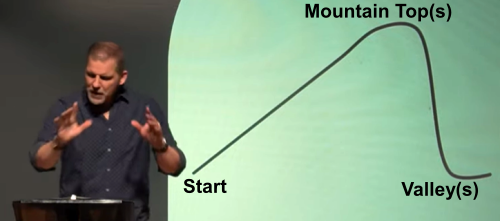 Patrick mentioned a reality suggested by today's scripture: the valleys are where growth can occur (more so than mountain tops). He developed this a little more in a message back in 2024: That Hurt: Acts of God (image at right).
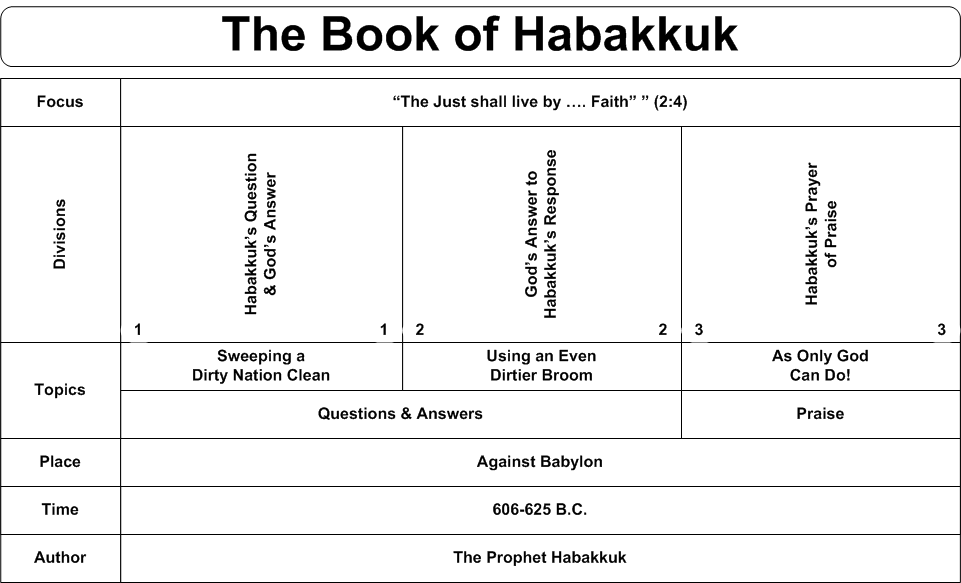
Patrick mentioned the musical notation of shig-gaw-YONE or shig-gaw-YO-nah (שִׁגָּיוֹן) in Habakkuk 3:1. It's like an exclamation point, which Patrick covered. (I should point out that there is no punctuation in the original Biblical Hebrew.) I'd like to add a second musical term that occurs in verse 3: selah (סֶלָה). This term is more like a hold, a pause or suspension in the music (like a fermata or a rest). It's used a great deal in the Psalms and three times in Habakkuk. It's one of those words that have no translation into English, like Hallelujah, so it's "English word" is simply a transliteration, a spelling in English that SOUNDS LIKE the original Hebrew word. While there is still some discussion about exactly what it means, a fair summary might be "pause, ponder, reflect." One commentary (Jamieson, Fausset & Brown) suggested, "The solemn pause here prepares the mind for contemplating the glorious description of Jehovah's manifestation which follows" (Commentary on Habakkuk 3).
Patrick mentioned the importance of remembering. In the valleys, remember the good things the Lord has done and let that support your faith. Remembering is a huge deal in the Torah which I discussed in some detail here: Galations #3: Live by Faith.
An interesting sidenote from a Torah perspective is that in Habakkuk 3:3, the singular form of Elohim is used, Eloah. Elohim is the God of Creation, the God of the Universe, everyone's God. The plural is usually used to make clear He is all the gods in one, sorta speak. After Creation, the term for God becomes Adonai/Lord/Jehovah, the more personal God. This singular form, Eloah, is found only in Isaiah, Daniel, Job, and Deuteronomy - and here in Habakkuk.
Bonus
Gleanings from God's Provision
 From The Christian Broadcasting Network, Inc. - subscribe for free devotionals and breaking news reports each week from the Holy Land - all from a Christian perspective!
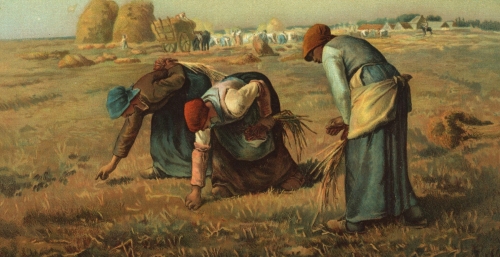
"When you reap the harvest of your land, you shall not wholly reap the corners of your field when you reap, nor shall you gather any gleaning from your harvest. You shall leave them for the poor and for the stranger: I am the LORD your God" (Leviticus 23:22).Happy Thanksgiving!
Harvest season was a time of joy and reward in ancient Israel. After long months of plowing, planting, and praying for rain, the farmer finally gathered the fruits of his labor. Yet even in that moment of abundance, God gave an instruction that must have tested human instinct: leave the corners of your field and any fallen grain untouched. Those portions were not for the farmer's family, but for the poor and the foreigner.
It was a lesson in generosity and humility. The field belonged to the farmer, but the harvest belonged to God. He was the true source of every blessing, and His command invited His people to remember that all provision comes from His hand. Leaving the gleanings was an act of worship, a visible sign that the farmer trusted God enough to give away what might have been his own.
We see this principle in the story of Ruth. A widowed foreigner, she gathered grain from the edges of Boaz's field and found not only sustenance but redemption. In her humble labor and Boaz's compassion, the love and provision of God became tangible. What began as an ordinary act of obedience turned into a story of grace that reached all the way to the lineage of Christ.
The command to leave the edges of the field still speaks to us today. It reminds us that faithfulness is not only about what we keep but also what we release. God calls us to live with open hands, to make room in our abundance for others, and to reflect His love and generosity in our daily lives.
Perhaps we no longer reap from physical fields, but each of us has resources, time, and influence that God has entrusted to us. What corners of your "field" might you leave for others? How might you create space in your blessings for someone in need?
When we give freely, we proclaim with our actions that the Lord is our provider. In sharing what we have, we reveal His character to a watching world and participate in His ongoing work of mercy.
Prayer
Father, thank You for every single blessing and provision You have given me. Teach me to live with an open hand, to see the needs of others, and to share what You have entrusted to me with both faith and generosity. Amen.