The Dangerous Disconnect
March 15, 2026Pastor Patrick presented today's message, "The Dangerous Disconnect." A video of today's message is here on YouTube. It may help to be familiar with the message but that is not required to enjoy the thoughts below.
Here are some tidbits I picked up in Watke's New International Commentary on the Old Testament (NICOT): Proverbs Chapters 1-15:
There are three stories in Proverbs that come before this one that are also about saving a son from an unchaste wife. These are Proverbs 2:16-19, 5:1-23, and 6:20-33. Each focus on a different angle, like financial and social losses and results for the cuckold (the husband of an adulterous woman).
The first five verses of Chapter 7 are a typical introduction that forms the image of "freedom within form, love within limits, and life within law." In this opening, the father also suggests that the son "bind them (teachings/laws) upon your fingers" which should always be visible to you, a constant reminder of these lessons. Much of the benefit of all rituals in the Bible is to remember. This is similar to the purpose of tzitzit, the fringes/tassels on Jewish clothing to remind us to obey God's commands.
The phrase "gave heed" in verse 7 "means that he used his senses along with discernment and interpretation to get understanding."
In verse 8, while describing where the son walked, he says "beside her corner." This makes it clear that the son is off the beaten path of most walkers and has strayed into her domain. His "taking strides" also suggest a certain strutting, marching as it were. But he's marched into the wrong place at the wrong time, and the darkness of where he is leading himself is further described in verse 9.
Verses 10-13 are the father's description of her dress and approach as a harlot. To him it's clear, but to the foolish son her dress is camouflage. "Lurks" suggests lying in wait for her prey, which, again, the wise father sees clearly but the son misses entirely.
If you want to go even deeper, see pp. 361-382 in the Watke book referenced above.
Bonus
Biblical History Related to War in Iran
If you're not familiar with the Christian Broadcasting Network (CBN), here's a chance for some exposure. The organization has many facets, one of which is CBN Israel.
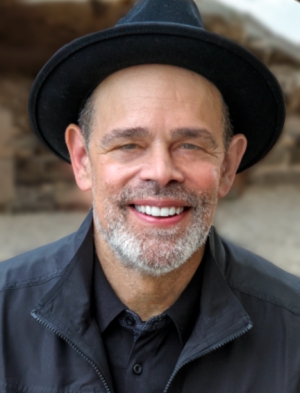 I get periodic emails from them, mostly from CBN Israel. I'm sharing a video from March 13, 2026 with a number of interesting features.
700 Club Israel - March 13, 2026. Here's how the video breaks down across the 28 minutes:
- 00:00-10:51 Messianic Rabbi Jason Sobel (pictured at right) Relates Biblical History to War in Iran
- 10:51-13:14 promos
- 13:14-17:40 Missile Survivor
- 17:40-21:02 promos
- 21:02-28:00 Torah and the IDF
Bonus2
18th Century Presbyterian Minister Developed Bayesian Modeling
I love it when two of my passions merge. Who would have thought that an 18th Century Presbyterian minister (my Dad was a 20th Century Presbyterian minister) would lay the groundwork for a modeling process that is at the root of your car or phone's navigation system and finding lost aircraft and ships.
Bayesian Modeling (see Bayesian Statistics) is a system that continues to "correct" probable answers to a problem as new evidence (data) is collected in a systematic way. Your car's navigation system continually updates its estimate of arrival time (ETA) based on data it receives over time about each potential route's segments. Is there road work, accidents, slow traffic, weather, etc.? It takes a predicted outcome at one moment, adds new data, updates the prediction, gets new data, repeated over and over until you eventually arrive, constantly updating your ETA.
As you might imagine, this continual process can require a fair amount of mathematical effort. And before computers, say in the 18th Century, actually doing continuous updating would be unwieldy. Rev. Thomas Bayes' theory was never published by the time he died in 1761. Fortunately, after he died, his friend Richard Price published the theory in 1763, but it went largely unnoticed, or at least unused, for about 150 years. With the arrival of computers in the 20th Century, all of a sudden there was renewed interest.
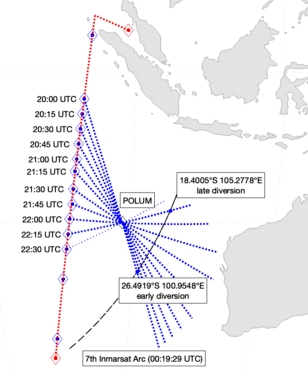 So what is my colliding area of interest? As some of you may know, I'm an aviation industry enthusiast with a particular interest in aviation accidents and the follow-up safety upgrades. One of today's biggest mysteries in this field is flight MH370 from Malaysia to Beijing which disappeared in 2014, seemingly somewhere in the south Indian Ocean.
So an 18th Century minister's contribution to mathematic statistics and probabilities is now being put to use to find probable locations for the wreckage of MH370! And you'd be amazed at the types of data that are being thrown into the mix for finding the plane's resting place, including debris drift modeling, satellite handshakes, performance limits of the plane, human behavior, and more.
By the way, the plane has not yet been found despite on-and-off searches from 2014 through February of this year. At the moment, searching has stopped, but work on the probable locations continues.
If you'd like to go a little deeper into Bayesian Modeling and how it relates to the search for MH370, checkout this video: Critical Bayesian Modeling Explained by Airline News with Geoffrey Thomas (and Richard Godfrey).
Bonus3
Ultimate Engineering (book)
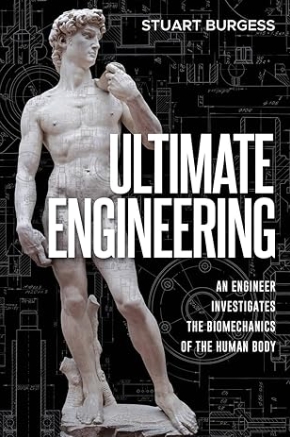 Ultimate Engineering: An Engineer Investigates the Biomechanics of the Human Body by Stuart Burgess is a book you may never have expected to see written. On the other hand, if you have marveled at the human body all your life, it may be exactly what you expected.
Here's the description on Amazon:
Who first invented fiber optic cables? Or camera shutters? Or truss structures? Or double wishbone suspensions? Or block-style Roman arches? What about laser beams? As award-winning British engineer and designer Stuart Burgess reveals, the original inventor of these and countless other ingenious devices was no human inventor. Instead, the “first to market” was the designing force behind the living world.In his book, Burgess describes the marvels of the foot and ankle all the way up to the eye, the biomechanics of birth, the digestive system, the nervous system, and more. He discusses why biological systems can't self-organize, why evolutionary theory is in decline and intelligent design is on the rise, ultimate engineering throughout nature (not just the human body), and lastly asks "will the real pro-science paradigm please stand up?"
Evolutionary theory predicts a living world crowded with substandard designs. But as Burgess shows in Ultimate Engineering, the latest science has discovered just the opposite - designs so advanced they are at the limit of the possible, precisely as proponents of the theory of intelligent design anticipated. As Burgess also details, he and other researchers are taking the discovery of these advanced designs and using them to inspire fresh technological breakthroughs - a revolution known as biomimetics.
Prepare to be amazed. Next time you see a marvel of human engineering and say, "Thank God," you may be far closer than you think.