You Can't Follow Both
February 15, 2026Pastor Josh Starnes presented today's message, "You Can't Follow Both." A video of today's message is here on YouTube. It may help to be familiar with the message but that is not required to enjoy the thoughts below.
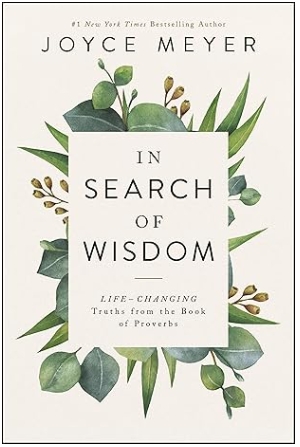 Joyce Meyer overlayed a set of Seven Foundational Principles onto all the proverbs in Proverbs in her book: In Search of Wisdom. She argues that one or more of these principles can be assigned or applied to each of the many proverbs in Proverbs.
Wisdom
Proverbs encourages us to apply what knowledge we have into practice in our daily lives. This is wisdom, being able to draw conclusions about what to do every day in the face of a set of circumstances. The Hebrew word for wisdom is khok-MAH (חָכְמָה). It is this wisdom for which the fear of God is a prerequisite. There are two applicable words in the Greek, sophia (σοφία) and Phronesis (φρόνησις). Sophia is more insight related, understanding things of nature, theoretical. Phronesis is practical application of sophia. In the Greek, we are to do two related things: understand the world and apply that knowledge into action when faced with choices or situations.
Understanding
This is basically to "get it." It's closely related to knowledge and must be sought and learned. For example, we must understand the sorts of reactions harsh words create versus words of encouragement.
Prudence
Meyer defines this as forethought and foresight. It's about managing our affairs and resources well.
Knowledge
Meyer points out that the Hebrew word for knowledge is yada (יָדַע) and is much broader than our current definition of knowledge. It includes perceiving, learning, understanding, willing, performing, and experiencing. It's not just information but exercise and realization as well; an embodiment or absorption of the information into your being.
Discretion
Meyer defines this as the ability to behave or speak in such a way as to avoid causing offense or revealing private information. She offers these synonyms: circumspection, delicacy, discernment, and prudence. (Yes, these do overlap.)
Discernment
Fear of the Lord
As I've mentioned a number of times throughout this website, this is not the "quake in your boots" kind of fear. It's more like ultimate awe, respect, and reverence. Understanding who is most important to please. As stated in Proverbs 1:7, "fear of the Lord is the beginning of knowledge" (and wisdom, in Proverbs 9:10).
Her book goes on to cover Proverbs chapter by chapter with these Seven Foundational Principles in mind. These principles may help you get a handle on the 900+ proverbs in Proverbs.

Our Family Dinners of late are focusing on Proverbs. The topic has turned out to be quite a hit.
Bonus
Decide to Try
A recent Nana Post read: "Every Accomplishment Starts with the Decision to Try." A variation on this is "every journey begins with a first step." Turns out these Nana Posts are proverbs - little nuggets of wisdom.
Proverbs may be a good first step... But let me back up a moment first. I looked up "try" in the Hebrew concordance and found that it relates mostly to testing, as in trial. The notion of a first step is more clearly related to the Hebrew word for beginning as in 'first time" (te-khil-LAH, תְּחִלָּה).
But wait, there's an even better word for beginning, ray-sheeth' (רֵאשִׁית). This is the word used in Genesis 1:1, "In the beginning..." This is one use, an inaugural moment. It also is used for the first step in a process which is more related to "try" in our context here. And lo and behold, this is the word used in Proverbs, "the fear of the Lord is the beginning of knowledge/wisdom."
So where am I going with this? In addition to setting off on any journey, do it wisely. And doing it wisely means the first step should include deciphering what God might think of the endeavor first.