Believer vs Follower
September 6, 2026Pastor Patrick presented today's message, "Believer vs Follower." A video of today's message is here on YouTube. It may help to be familiar with the message but that is not required to enjoy the thoughts below.
Today message is the first of 12 weeks in the Book of Mark.
Both the Greek and Hebrew words for 'follow' provide interesting insight...
The Greek is ah-ko-loo-THEH-oh (ἀκολουθέω). The word comes from keleuthos meaning a road or a way. In essence, it's to be on the same road or path as someone, someone you are "following." It's always translated as some form of 'follow' in all 90 New Testament occurrences. In our case, Mark 1:18, "they left their nets and followed Him" (NAS). Strong #190.
The Old Testament Hebrew word for follow is ah-khar' (אַחַר). It's typically translated across its 715 occurrences primarily as a form of 'after' or 'follow.' Its origin is with the word achar meaning hind or following part, even "behind" as in loitering or tarry. The interesting thing is the notion of part. Even though you're following, you're following as the hind part of something. In a sense, you are one with what you're following. Here's an example where God speaks of Caleb (representative of the Tribe of Judah and one of the spies sent in Canaan by Moses; he and Joshua said the people should trust God and go up into the land) following Him: "But because my servant Caleb has a different spirit and follows me wholeheartedly, I will bring him into the land he went to, and his descendants will inherit it" (Numbers 14:24). Strong #310.
Bonus
Are Archeologists Close to Finding the Ark of the Covenant?
Maybe.
What has been unearthed in the second season of digging are remnants of what matches Biblical descriptions of the Tabernacle in Shiloh that may have housed the Ark of the Covenant for a few hundred years before the construction of the First Temple in Jerusalem in the 10th Century BCE.
Shiloh was first mentioned in Genesis 49:10, "The scepter shall not depart from Judah, nor a lawgiver from between his feet until Shiloh come; and unto Him shall the gathering of the people be."
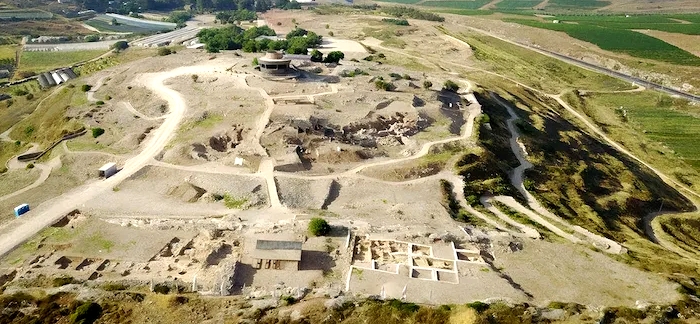
Shiloh looking south, Answers in Genesis
The discovery of the "southern wall" this season was a big deal. It's now possible to see the building's footprint.
There also have been discoveries of two "little things" that are fascinating as well. One is murex shells. These are the shells of the sea animal highly prized in ancient times as they were used in the production of a very rare blue dye that was specifically called for regarding the priests' clothing. Another tantalizing tidbit is that remains of animals (bones, mainly) at the site show more parts from the right side than the left side. This is in keeping with the Biblical instructions from the Book of Leviticus that the right side of sacrificed animals belonged to the priests.
Also recently uncovered were parts of the city's defenses, including a fortified gate. This gate may have been the very complex mentioned in the Bible's account of Eli's death after hearing that the Ark had been captured.
At this point, the team notes that they have not found the Ark of the Covenant nor do they have definite proof that this is the right Tabernacle. What they have, they say, is "a growing mountain of circumstantial evidence."
See the article: Archaeologists may have found ruins that housed the Ark of the Covenant. You can find lots more by searching on keywords like "Shiloh excavation tabernacle archeology ark" and the like. The dig is being conducted by the Associates for Biblical Research (ABR).
Bonus2
On the Anniversary of Charlie Kirk's Assassination...
On September 10, 2025, one year to the day that I'm writing this, Charlie Kirk was assassinated. PragerU produced an 8-minute video that summarizes the effect Charlie had. Watch it here: How Charlie Kirk Changed America.
Bonus3
The Sound of the Shofar
The blowing of the Shofar announces the Jewish New Year, Rosh Hashanah, as described in Leviticus 23:24-25, where God instructs Moses to "Speak to the Israelites, saying: In the seventh month, on the first day of the month, you shall observe a day of complete rest, a holy convocation commemorated with trumpet blasts. You shall not work at your occupations, and you shall present the Lord's offering by fire."
The Shofar, made of a ram's horn, is a trumpet like instrument with a very distinctive sound some describe as wailing or mournful or jubilant or exciting.
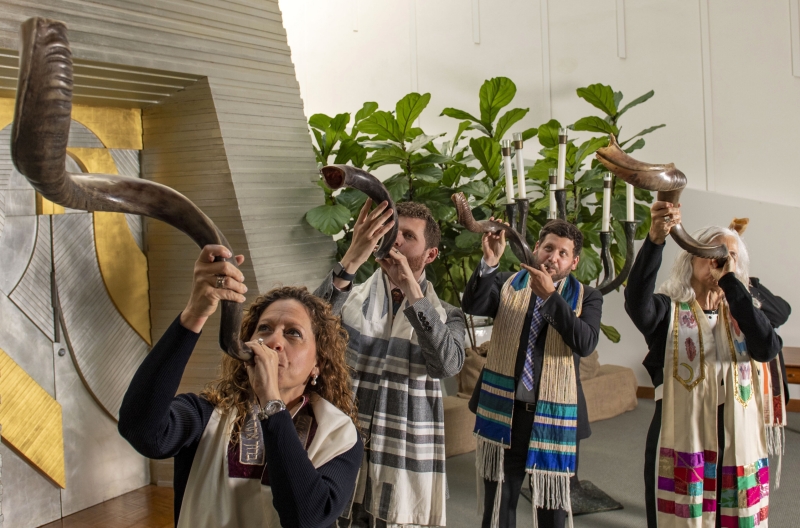
There are four main ways to blow the Shofar (from: Blowing the Shofar in Worship):
- Tekiah: One long blast, a summons or wake-up.
- Shevarim: Three medium blasts, sometimes compared to the sound of weeping.
- Teruah: Nine blasts as eight quick staccato notes followed by a longer blast that seems to have an alarming urgency about them.
- Tekiah Gedolah: One very long blast that rises in force and volume.
Rosh Hashanah begins today (September 11th) at sundown and ends at nightfall on September 13th. It begins a season of Jewish holy days that ends with Yom Kippur, the Day of Atonement, which is this year on September 21st. As a group, these two holy days are known as the High Holy Days in the Jewish community.
The Shofar or trumpet is mentioned over 70 times in the Old Testament.