Does God Still Heal?
September 13, 2026Pastor Patrick presented today's message, "Does God Still Heal?" A video of today's message is here on YouTube. It may help to be familiar with the message but that is not required to enjoy the thoughts below.
Today's message comes on the second of 12 weeks in the Book of Mark.
As part of his message, Patrick refers to the healing of the leper in Mark 1:40-45. In it there is a reference to "Moses' commands for your cleansing." That is understood as a reference to Leviticus 14:1-32 which talks about the laws for the cleansing of someone with a skin disease. This section also includes a discussion of what to do if the diseased person is poor and cannot pay for the sacrificial animals. The word translated as leper/leprosy probably included various forms of skin disease. A form of the same word is also used to mean forms of mildew on garments, utensils, buildings, etc.
The notion of "immediately" is a common thread in Mark's gospel. In today's scripture (Mark 1:20 - 2:12), "immediately" is used twice. The Greek word is euthus (εὐθύς). Mark uses the word a number of times throughout his book which adds to his "fast-paced" storytelling. The root of euthus is euthy which is often used in the Septuagint (Greek translation of the Old Testament) to translate the Hebrew word yasar (יָסַר) which means to correct, chasten, reform, instruct and the like. I wondered a bit what the two had in common until further reading connected immediately with straightaway. One can't go immediately if one does not go straightaway. And most people venturing off course need correcting. Put another way, if your course is constantly being corrected, you're going as "immediately" as possible. See Strong 2117.
Lastly, today's message also dealt with faith. In Mark 2:5, when Jesus sees the faith of the paralyzed man's friends, He forgives the man's sins. The point Patrick was making is that "who you hang out with makes a difference." A look at the Greek word for faith, pistis (πίστις), I learned that faith, in the context of the New Testament, is always a gift from God and is not something humans can gin up on their own. The root meaning of the word is persuade, and in the Bible, it refers to God's divine persuasion rather than human confidence. See Strong 4102.
Bonus
Yom Kippur - Day of Atonement
Yom Kippur (יוֹם כִּפּוּר) is the holiest of days in Jewish Life. It culminates the High Holy Days which started with Rosh Hashanah, the Jewish New Year, on September 11-13, 2026. Yom Kippur this year is from sunset on September 20 to nightfall on September 21.
Here's a 21-minute video from the Chrisian Broadcasting Network and the 700 Club: This Belief Could Be Keeping You From God's Grace. Here's the description of the video: "What can Yom Kippur teach Christians about repentance, humility, and the mercy of God? In Luke 18, Jesus tells the story of two men who come to the temple to pray - one confident in his own righteousness, the other simply pleading, 'God, be merciful to me, a sinner.' This teaching explores the Jewish Day of Atonement, the communal confession of the Vidui, and the danger of comparing our righteousness to others. Discover why true repentance begins when we stop pointing at 'them,' allow God to search our own hearts, and recognize that every one of us stands in need of grace, forgiveness, and mercy."
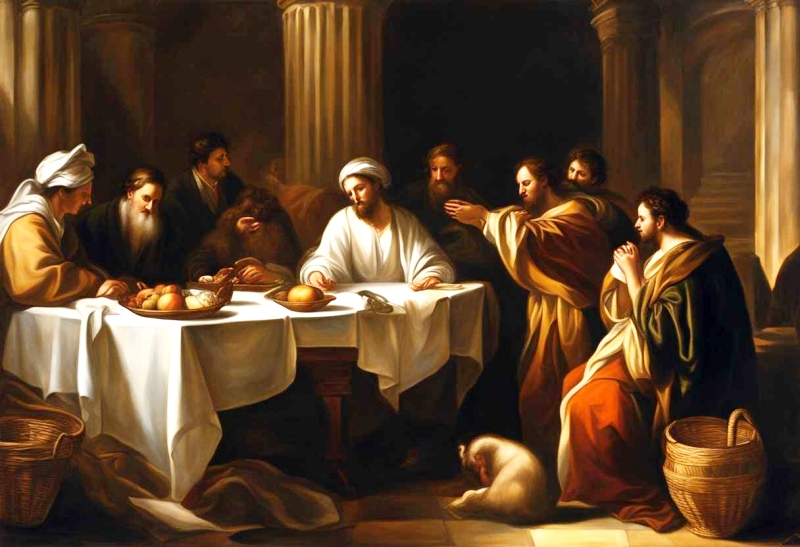
From God's Blessing: What the Bible Says About Yom Kippur: A Definition and Significance.